
×
Double Materiality Assessment Double Materiality Assessment
Double Materiality Assessment

Focussing on WHAT MATTERS FOR THE FUTURE

Defining what matters for lasting impact

Sustained business performance and responsible operations are two sides of the same commitment. In FY 2025-26, we conducted our Double Materiality Assessment through an independently facilitated process, engaging approximately 1,600 internal and external stakeholders across surveys, interviews, focussed group discussions, and 14 site visits. The assessment examined 26 material topics through two lenses:

Financial materiality: Considering how sustainability issues affect our business performance and capital.

Impact materiality: Considering how our operations affect people, ecosystems, and economies.

The results directly shape how we allocate resources, set targets, and strengthen disclosures across our Transforming for Good framework. A clearer understanding of which topics carry the highest financial and impact significance enables us to manage emerging risks proactively, respond to evolving stakeholder expectations, and pursue opportunities that create lasting value for our business and the communities we serve.

Purpose of Double Materiality Assessment (DMA)

We conduct a detailed materiality assessment every two years, with an annual management review, to identify and prioritise the topics that matter most to our stakeholders and our business. Our previous assessment was conducted in FY 2022-23, guided by GRI Standards 2021. Building on that foundation, our FY 2025-26 exercise was independently facilitated and aligned with the principles of the EU Corporate Sustainability Reporting Directive (CSRD) and leading sector standards, including GRI, ICMM, and SASB, and evaluated positive and negative impacts, risks, and opportunities associated with each of our 26 material topics. The findings inform how we set targets, allocate resources, and strengthen disclosures across the Vedanta Group. Additionally, the key KPIs for our material topics are aligned with annual independent assurance and audit requirements, ensuring we consistently meet our own standards and relevant industry benchmarks. The findings enable us to align our reporting with evolving stakeholder expectations, integrate material ESG risks into our enterprise risk management processes, and reinforce our commitment to long-term value creation and responsible business performance across the Vedanta Group.

Materiality determination process

Our approach to materiality determination examines each topic through the lens of strategy, risk, capital, and global sustainability priorities to ensure that what we disclose and manage genuinely what matters most. By integrating these elements, we aim to deliver long-term value for our stakeholders while contributing to broader societal and environmental goals and ensuring alignment with the UN Sustainable Development Goals. For each of our 26 material topics, we ensured that our sustainability commitments remain focussed, resilient, and accountable across the Vedanta Group.

Approach and methodology

Our Double Materiality Assessment followed a structured methodology, independently facilitated and informed by leading international frameworks. We analysed both dimensions of materiality, systematically examining how sustainability issues affect our business and how our business affects the world around it across the full breadth of our operations and stakeholder universe.

1
Identification of potential material topics

Identify potential material topics by analysing company disclosures and benchmarking against peer reports, global standards (including GRI 11, GRI 14, ICMM, and SASB), rating methodologies, and expert inputs, followed by consolidation of these insights to develop a mutually exclusive and collectively exhaustive list of ESG topics.

2
Map Impacts, Risks, and Opportunities (IRO)

Identify and map positive and negative impacts, and financial risks and opportunities for each material topic using internal sources (risk registers, human rights and community assessments) and external inputs (peer reports, media, GRI, SASB, and rating methodologies). This resulted in 250+ IROs, with key risks further assessed for potential financial impact.

3
Stakeholder engagement

Engage key internal and external stakeholders through surveys, interviews, and focussed discussions to validate and prioritise IROs. Over 1,625 internal and external stakeholders were consulted, and inputs were scored to assess impact significance (scope, scale, likelihood, irremediability) and financial risks and opportunities (magnitude and likelihood).

4
Development of materiality matrix

Score material topics based on stakeholder inputs and apply weightings for stakeholder influence and interest, along with revenue-based weightages to derive group-level prioritisation, resulting in a consolidated materiality matrix across financial and impact dimensions.

5
Validation and review

Review and validate the materiality outcomes with senior leadership, followed by final approval from the Board-level ESG Committee. The overall process and results were also subjected to independent third-party assurance to ensure transparency and credibility.
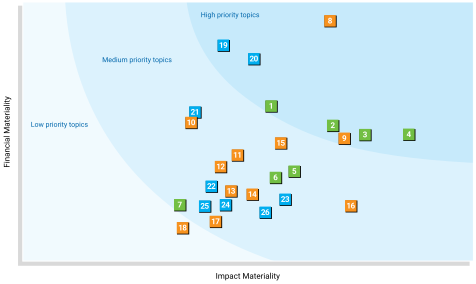
Double Materiality Matrix

Double Materiality Matrix plotting financial materiality against impact materiality
Environment
  1. Tailings Management
  2. Water and Wastewater Management
  3. Climate Change and Energy Transition
  4. Air Emissions and Quality
  5. Biodiversity and Ecosystems
  6. Circularity and Waste Management
  7. Materials Management
Social
  1. Health, Safety and Well-being
  2. Community Engagement and Development
  3. Talent Attraction and Retention
  4. Labour Practices
  5. Indigenous People and Cultural Heritage
  6. Decommissioning, Closure and Rehabilitation
  7. Sustainable and Inclusive Supply Chain
  8. Human Rights
  9. Learning and Development
  10. Diversity, Equal Opportunity and Inclusion
  11. Artisanal and Small Scale Mining
Governance
  1. Risk Management and Controls
  2. Business Ethics and Corporate Governance
  3. Responsible Advocacy
  4. Macro-economic and Geopolitical Context
  5. Long-term Growth and Profitability
  6. Data Privacy and Cybersecurity
  7. Product Stewardship
  8. Technology and Innovation

Translating materiality into strategy

The priorities identified through this assessment directly shape Vedanta’s Transforming for Good framework: its three pillars, nine Aims, and the KPIs that track progress against each. Where the assessment has surfaced new or elevated material topics, additional KPIs are being developed and mapped, informed by stakeholder inputs.

Additionally, the key KPIs for our material topics are aligned with annual independent assurance and audit requirements, ensuring we consistently meet our own standards and relevant industry benchmarks. The findings enable us to align our reporting with evolving stakeholder expectations, integrate material ESG risks into our enterprise risk management processes, and reinforce our commitment to long-term value creation and responsible business performance across the Vedanta Group.

Addressing our material issues

Health Safety and Well-Being

High Priority
Social · Aim 7
Importance and KPIs

Ensuring a secure and productive environment for employees, minimising risks and promoting overall organisational success


KPIs
  • Zero fatalities
  • TRIFR
  • LTIFR
  • CAPA compliance target
Performance FY 2025-26
  • Fatalities: 4
  • TRIFR: 1.30
  • LTIFR: 0.44
  • CAPA Compliance
Targets for FY 2029-30
  • 0.8 TRIFR per million-man hours
  • No employee exposure to red zone areas
GRI 403: Occupational Health and Safety 2018
BRSR Principle 3
Strategic response S1
Related risks R1
UNSDGs linked Linked SDGs
Capitals impacted Capitals impacted
Stakeholder group most concerned Stakeholder groups most concerned

Click here to read more

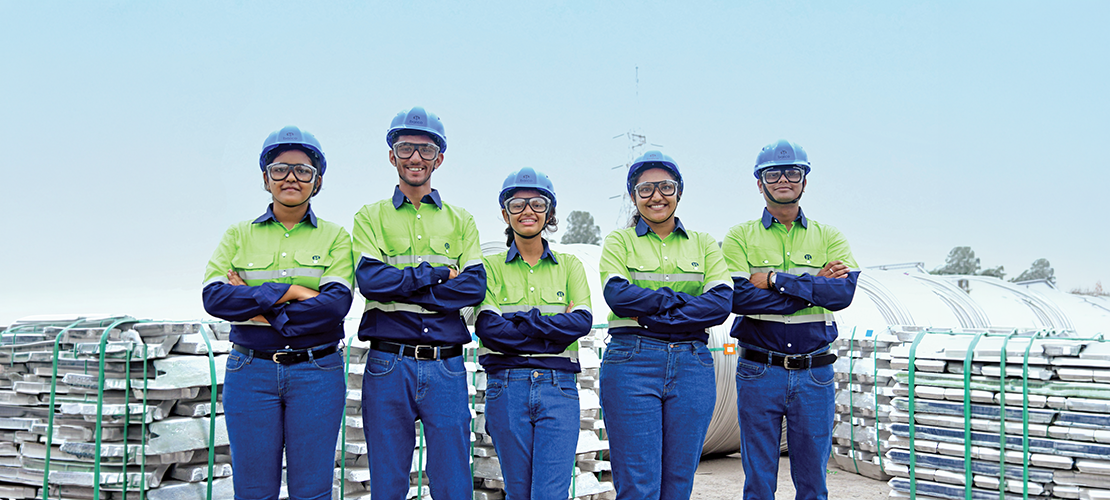
Vedanta team members in safety gear

Air Emissions and Quality

High Priority
Environment · Aim 6
Importance and KPIs

Reducing environmental impacts and maintaining air quality while ensuring compliance with regulations, and safeguarding public health

KPIs
  • SOx emissions
  • NOx emissions
  • PM
Performance FY 2025-26
  • SOx emissions: 4,21,680 MT
  • NOx emissions: 1,15,992 MT
  • Particulate matter: 15,534 MT
Targets for FY 2029-30

–

GRI 305: Emissions 2016
BRSR Principle 6
Strategic responseS1
Related risksR1
UNSDGs linkedLinked SDGs
Capitals impactedCapitals impacted
Stakeholder group most concernedStakeholder groups most concerned

Click here to read more

Climate Change and Energy Transition

High Priority
Environment · Aim 4
Importance and KPIs

Reducing carbon footprints through renewable power adoption, complying with regulations, and positioning us as a leader in sustainability

KPIs
  • GHG emissions (Scope 1 and 2)
  • GHG emission intensity (tCO2e/MT)
  • Renewable energy in operations (%)
  • Energy consumed (GJ)
  • Biomass usage (GJ)
Performance FY 2025-26
  • Scope 1 and 2 GHG: 71.45 million tCO2e
  • GHG emission Intensity (tCO2e/MT): 5.51 tCO2e/MT (~14% reduction from baseline FY 2020-21)
  • RE in operations: 2.6%
  • Energy consumed: 728.6 million GJ
  • Biomass usage: 5.24 million GJ
Targets for FY 2029-30
  • 25% reduction in absolute GHG emissions (FY 2020-21 baseline)
  • 20% reduction in GHG emission intensity across metal businesses by FY 2025-26 (FY 2020-21 baseline)
  • 2.5 GW RE RTC or equivalent
  • Hydrogen fuel adoption pathway
GRI 302: Energy 2016 · GRI 305: Emissions 2016
BRSR Principle 6
Strategic responseS1S5
Related risksR7
UNSDGs linkedLinked SDGs
Capitals impactedCapitals impacted
Stakeholder group most concernedStakeholder groups most concerned

Click here to read more

Water and Wastewater Management

High Priority
Environment · Aim 5
Importance and KPIs

Conserving water resources, preventing contamination, and supporting sustainable operations in water scarce regions

KPIs
  • Water recycling rate (%)
  • Freshwater consumption (m³)
  • Water positivity ratio
Performance FY 2025-26
  • Water recycling: 38%
  • Net Freshwater Consumption: 165.6 million m³
  • Water positivity: 0.64
  • Zero water related incidents
Targets for FY 2029-30
  • >1 ratio of net water positivity
  • Zero category 4 and 5 incidents related to water
GRI 303: Water and Effluents 2018
BRSR Principle 6
Strategic responseS1
Related risksR3R7
UNSDGs linkedLinked SDGs
Capitals impactedCapitals impacted
Stakeholder group most concernedStakeholder groups most concerned

Click here to read more

Business Ethics and Corporate Governance

High Priority
Environment · Aim 9
Importance and KPIs

Fostering trust, transparency, and accountability are essential for maintaining stakeholder confidence and long-term business integrity

KPIs
  • % of Independent Board members
  • Gender diversity in the Board
  • Transparent disclosures
Performance FY 2025-26
  • Independent Directors on Board: 50%
  • Gender Diversity: 23%
  • Data Breaches: Zero
  • Percentage of employees trained on code of conduct: 100%
Targets for FY 2029-30
  • Continued training of 100% of employees on the Code of Conduct
GRI 205: Anti-corruption 2016 · GRI 2: General Disclosures 2021
BRSR Principle 1
Strategic responseS1
Related risksR1R10
UNSDGs linkedLinked SDGs
Capitals impactedCapitals impacted
Stakeholder group most concernedStakeholder groups most concerned

Click here to read more

Tailings Management

High Priority
Environment · Aim 6
Importance and KPIs

Ensuring responsible mining practices that reduce ecological harm and mitigate long-term liabilities

KPIs
  • All tailing facilities audited (%)
  • Third-party audit coverage (%)
  • GISTM conformance rate (%)
  • Real-time monitoring coverage
Performance FY 2025-26
  • All tailings facilities audited, and critical actions closed with real-time monitoring
  • All facilities audited by third party
  • ISTM conformance is being re-calibrated
Targets for FY 2029-30
  • Align with GISTM conformance
  • All tailing facilities are audited, and actions are closed with real-time monitoring
GRI 304: Biodiversity 2016 · GRI 306: Effluents and Waste 2020
BRSR Principle 6
Strategic responseS1
Related risksR3
UNSDGs linkedLinked SDGs
Capitals impactedCapitals impacted
Stakeholder group most concernedStakeholder groups most concerned

Click here to read more

Community Engagement and Development

High Priority
Social · Aim 1 · Aim 2 · Aim 3
Importance and KPIs

Ensuring a secure and productive environment for employees, minimising risks and promoting overall organisational success


KPIs
  • Total CSR expenditure (₹ crore)
  • Total community outreach (persons)
  • Nand Ghars in operation
  • Grievance resolution rate (%)
Performance FY 2025-26
  • CSR expenditure: ₹ 418.7 crore
  • Number of individuals to be impacted through skill development and training: 1.75 million
  • Nand Ghars operational: 12,769
Targets for FY 2029-30
  • 2.5 million individuals to be impacted through skill development and training
  • 29,000 Nand Ghar’s to be completed
GRI 413: Local communities 2016
BRSR Principle 8
Strategic responseS1S3
Related risksR2R7
UNSDGs linkedLinked SDGs
Capitals impactedCapitals impacted
Stakeholder group most concernedStakeholder groups most concerned

Click here to read more

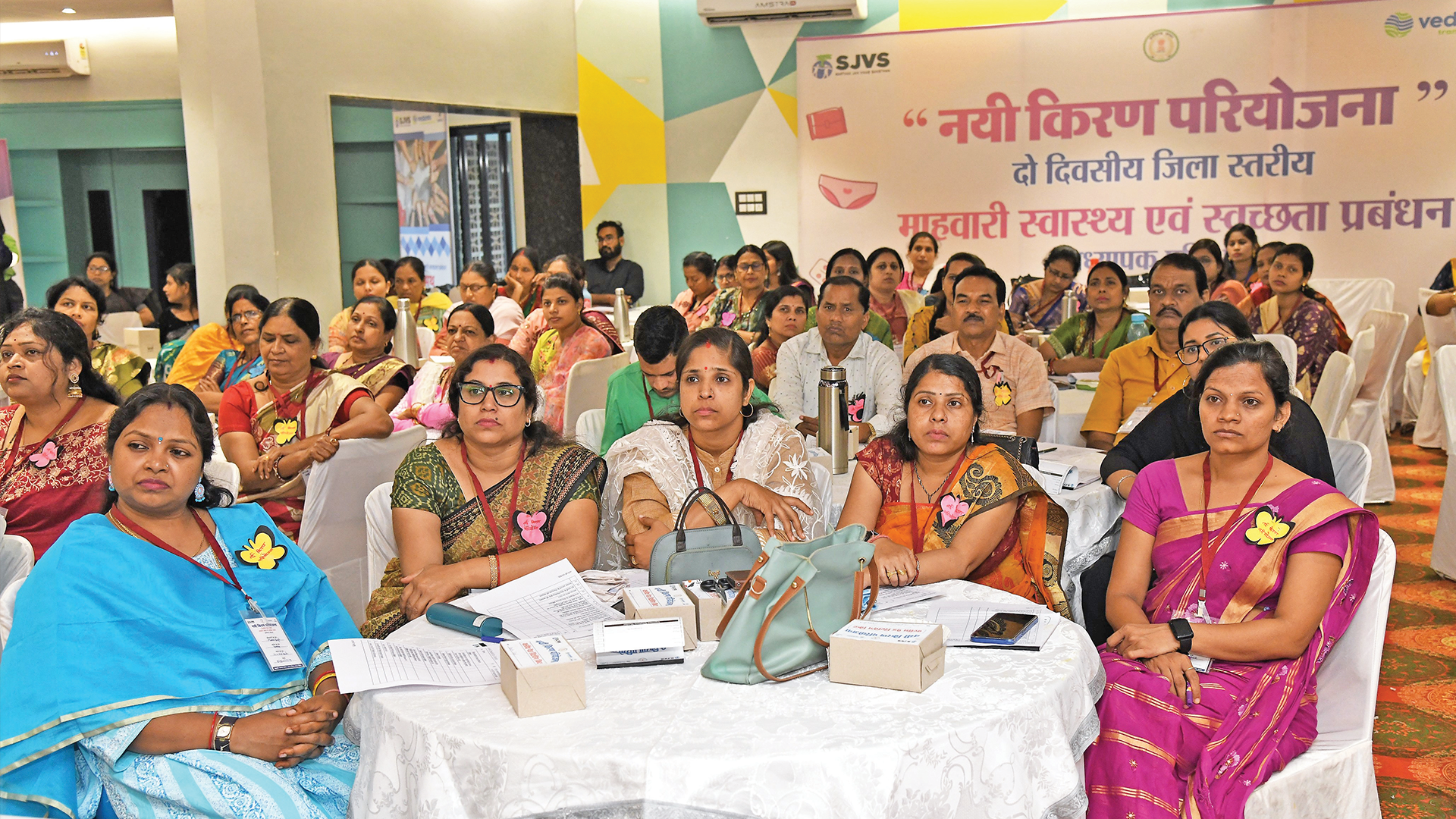
Community engagement session