The resources we develop are deeply connected to the well-being and progress of the communities around our operations. We earn our social licence to operate through consistent action, transparent engagement and commitment to shared prosperity for the local communities, stakeholders, and society.
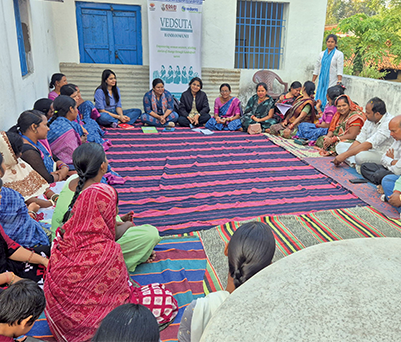
Every site maintains structured community engagement processes, grievance redressal mechanisms, and social performance teams whose mandate is to ensure our presence creates more value than it consumes. We recognise that both our business and the communities we operate within are continuously evolving, requiring an adaptive engagement strategy that addresses short-term risks while responding to long-term community aspirations.
Our community development efforts are organised around three Aims:
Social Investment
₹ 418.7 crore
Stakeholders impacted through various CSR activities
7.8 million
Number of stakeholders who secured a job post upskilling programmes/ Number of families upskilled
1.75 million
Number of women and children uplifted through Education, Nutrition, Healthcare and Welfare since 2016
31.09 million
Number of beneficiaries through the Sports Programme
72,167
Total sales through women-led enterprises
₹ 2.8 crore
Strengthening our social licence to operate by ensuring that community welfare considerations remain embedded in our operational and business decision-making processes
Community Engagement and Development
Strengthening dialogue and partnerships with local communities to ensure that development initiatives are responsive to local needs
Indigenous People and Cultural Heritage
Respecting cultural identity, traditional rights and heritage while ensuring responsible land and resource stewardship.
 Decent
Work & Economic Growth
Decent
Work & Economic Growth
For Vedanta, with operations spanning some of India’s most resource-rich and community-sensitive geographies, natural resource extraction and community well-being are deeply interdependent. Vedanta creates shared benefits through transparent engagement, responsive grievance resolution, local economic participation and community-led developmental initiatives, enabling communities to grow and prosper alongside our operations.
Our three-pronged social strategy, “Do No Harm, Building Trust, and Benefit Sharing”, provides the operating logic through which we pursue this. Do No Harm addresses the environmental, safety, and land-related impacts of our presence at source. Building Trust is maintained through continuous, transparent dialogue and grievance mechanisms that communities can use, are accessible in local languages, and are resolved with accountability. Benefit Sharing ensures that the economic value generated by our operations flows back into host communities through local employment, local procurement, and development programmes designed around what communities need rather than what is convenient to deliver.
Creating long-term, mutually beneficial relationships with the communities where we operate
Aim 1 primarily focusses on ‘Do no Harm to Communities’ and ‘Building Trust’ while ‘Benefit-Sharing’ spans across all three aims of our Transforming Communities
We deeply acknowledge our responsibilities where our operations bring us into contact with indigenous peoples and tribal communities. We seek informed consent before any project that may affect indigenous lands or resources, and approach land acquisition and resettlement with legal compliance and community consultation as non-negotiable conditions.
Kalahandi stands as a powerful example of how sustained investments, integrated development approach can drive inclusive development. Once defined by poverty, with per capita income barely touching ₹ 19,000 and contributing less than 1% to Odisha’s GDP, the district now ranks first in Odisha in Health and Nutrition and second in Education under NITI Aayog’s Aspirational Districts programme. Between 2003 and 2015, its GDDP grew over 16%, more than double the state average.
This transformation has been enabled through several systemic interventions, which included:
Our social performance is underpinned by a multi-tiered governance framework that links Board-level oversight with site-level execution. This structure ensures that community commitments translate into consistent, measurable outcomes across all operations of Vedanta Limited.
The Board-Level ESG Management Committee sets overall strategy and direction for sustainability and community initiatives and reviews performance against key ESG priorities.
The CSR Committee provides oversight of social investments and CSR programmes, ensuring alignment with organisational sustainability goals.
Site-Level Social Performance Steering Committees drive the implementation of community engagement initiatives and ensure programmes are aligned with local needs and priorities. Communities of Practice (COPs) works both at the group level as well as at the site level by enabling knowledge-sharing, monitoring, and standardisation of practices across business units.
Further at the site-level, Business Unit CEOs chair the SPSC and provide on-ground leadership and accountability for programme delivery. The Social Performance Manager leads the execution of social performance initiatives, oversees stakeholder engagement, and drives on the ground strategy execution. Grievance Mechanism Cells manage the receipt, review, and resolution of community concerns, ensuring timely, transparent, and accessible grievance handling.
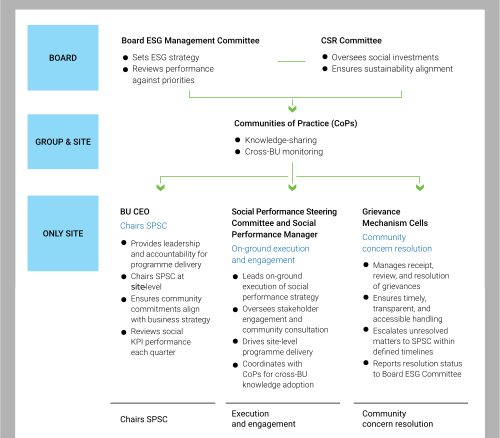
Each SPSC is chaired by the respective Business Unit CEO or an appointed site head. The on-site staff includes the Social Performance Manager, Grievance Mechanism Cells, and Community Liaison Officer. The cross-functional team draws representatives from External Affairs, Public Relations, Operations, Security, CSR, Human Resources, HSE, Finance, and Corporate Communications.
We follow a top-down approach of oversight and implementation of social performance. Implementation of the social strategy is overseen by the Business Unit CEO, with guidance from the SPSC at each site. The SPM is responsible for the on-the-ground execution of the strategy. The SPSCs, alongside the SPM and Grievance Mechanism Cells, play a critical role in fostering strong community relationships and ensuring the effective management of social performance.
We align with global human rights frameworks and embed these principles in our daily operations, treating freedom of association, collective bargaining, and indigenous autonomy as non-negotiable. Our grievance redressal mechanism is accessible in local languages and formats to ensure fair and fast resolution of issues. Feedback loops are integrated to strengthen continuous improvement. We also address complex issues like land acquisition and resettlement with sensitivity and legal compliance, always prioritising community consent and long-term restoration.
Site-specific Social Performance Steering Committees (SPSC) guide planning and implementation
Integrating social performance into site-level planning processes
Participatory needs assessments inform the allocation of community development resources
SPSCs are governed by the ESG Management Committee, which reports to the ESG Committee of the Board
Strengthening oversight through structured governance and leadership accountability
CSR Committee oversees social investments and alignment with sustainability goals
On-site Social Performance Management Teams drive implementation and engagement
Grievance Redressal Protocol ensures the timely resolution of community concerns
Annual VSAP audits assess effectiveness and ensure continuous improvement
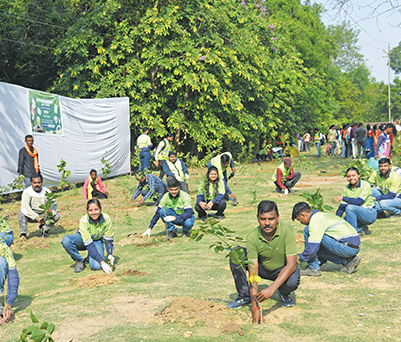
When 1,800 employees step outside their workplaces to serve the communities surrounding them, volunteerism stops being a programme and becomes a culture. For Vedanta Aluminium, this initiative demonstrates that social licence is not managed from a CSR department; it is carried by the people who work there every day.
On International Volunteer Day 2025, Vedanta Aluminium mobilised employees across its operational facilities to lead community facing initiatives spanning healthcare, education, livelihoods, environment, and women’s empowerment, contributing 4,000 hours of service, equivalent to nearly 167 continuous days of community engagement, and reaching over 0.7 million lives across three states.
Employee-led volunteerism addresses the gap between industrial presence and community opportunity differently from institutional CSR. It creates personal accountability, builds authentic relationships, and signals to communities that commitment is human and present, not distant and transactional. Embedding volunteerism into employee identity produces sustained engagement rather than episodic goodwill, and the multiplier effect compounds over time.
The initiative was structured as a coordinated single day mobilisation across Odisha, Chhattisgarh, and Andhra Pradesh simultaneously, with each facility organising locally relevant activities rather than applying a uniform template. In Lanjigarh, volunteers supported grassroots archery development and the revival of Saura and Dokra art forms, connecting artisans to new markets while preserving cultural heritage. In Korba, employee support helped women trained through livelihood programmes showcase their enterprises at regional exhibitions. Health camps across both states delivered preventive care to underserved communities. In Visakhapatnam, volunteers supported the establishment of digital learning labs in schools, expanding access to technology-enabled education beyond existing curricula.
Strengthen the economic resilience of host communities by equipping individuals with relevant skills, enabling sustainable livelihoods and improving access to employment opportunities
Community Engagement and Development
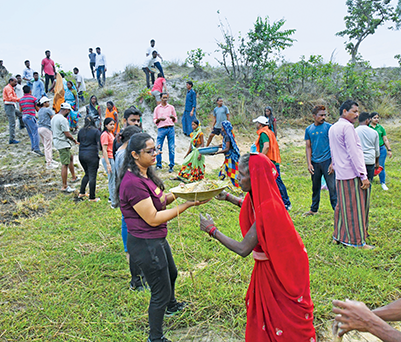
Our initiatives focus on community skill development, vocational training and livelihood enhancement programmes that prepare individuals for employment and entrepreneurship opportunities by equipping individuals with industry-relevant skills to enhance employability, enabling community members to pursue sustainable income opportunities and strengthening local capabilities through education, training and development initiatives
 Zero
Hunger
Zero
Hunger
 Quality Education
Decent
Work and Economic Growth
Quality Education
Decent
Work and Economic Growth
Extracting community resources without delivering proportional socio-economic benefits may lead to resistance from host communities and regulatory authorities, potentially restricting our business activities
By investing in livelihoods and well-being in host communities and strengthening relationships with local residents, we can build a skilled local workforce and create opportunities to tap into local talent for our operations
Our operations span some of India’s most remote and ecologically sensitive geographies, regions where access to quality education, vocational training, and formal employment has historically been limited. This is precisely where our responsibility is greatest, and where the opportunity for lasting impact is most real. In post-mining regions, tribal districts, and other marginalised communities, bridging the gap between industrial presence and community opportunity is not a peripheral responsibility; it is central to how we create lasting impact through our presence.
Aim 2 is founded on the conviction that lasting transformation begins when people are empowered to shape their own futures. Our goal of empowering 2.5 million individuals with enhanced skillsets by FY 2029-30 is being delivered through community-centric, locally calibrated interventions in vocational training, entrepreneurship development, sports, and livelihood support, creating pathways to economic participation, self-reliance and sustainable prosperity.
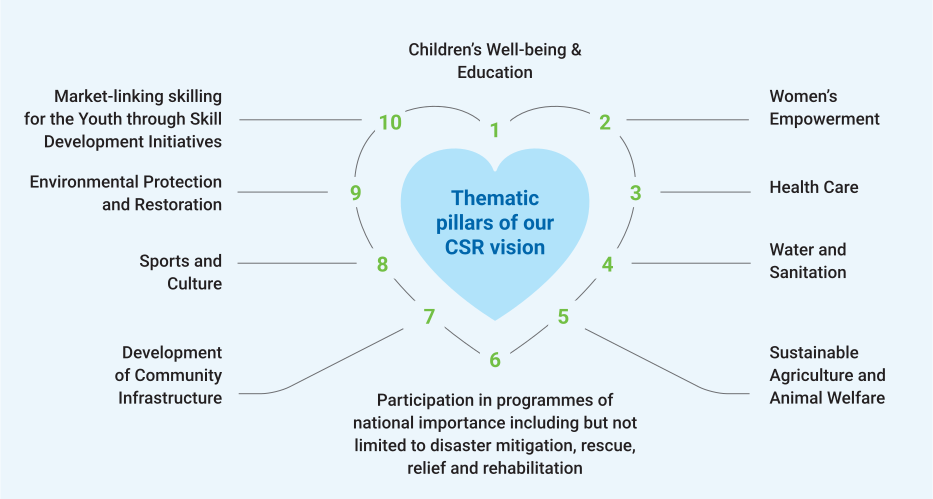
Our CSR Vision of empowering communities, transforming lives, and facilitating nation-building through sustainable and inclusive growth, organises these efforts around ten thematic priorities. Need assessments and baseline surveys conducted every three years by independent agencies keep our interventions relevant and responsive to evolving community realities.
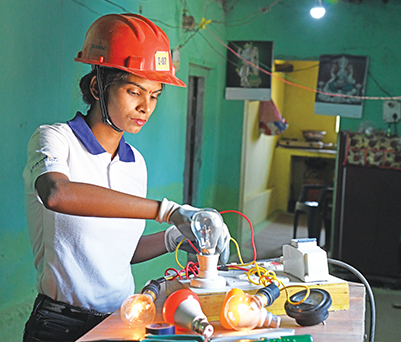
Our Community Skill Centres deliver vocational training calibrated to what local economies actually demand: electrical work, welding, tailoring, solar PV installation, digital literacy, financial awareness, and entrepreneurship. Programmes are assessed regularly and adjusted for local context, with deliberate attention to resettlement areas and post-closure sites where economic transition is most acute.
We are equally focussed on expanding access. Through free skilling modules for women, safe and inclusive learning environments, and mentorship-backed entrepreneurship pathways, we enable women and marginalised youth to participate fully in economic opportunities. The success of these programmes is measured not by enrolment, but by meaningful outcomes - employment and enterprise creation.
The Zinc Kaushal Kendra, operating across Hindustan Zinc’s facilities in Dariba, Agucha, Kayad, Udaipur, and Zawar, exemplifies the impact of industry-aligned skilling at scale. Developed to bridge the gap between rural education and urban employment, in partnership with NABARD, JK Cement, YES Foundation, and Bajaj Finserv, it offers intensive training in hospitality, microfinance, retail, customer relationship management, and entrepreneurship.
Impact
10,000+
youth skilled across Rajasthan and Uttarakhand since inception
2,256
youth trained in FY 2025-26
83%
placement rate achieved
85%
placement rate for a special batch of deaf and mute trainees at reputed hospitality brands, including Taj and Radisson Blu
Smart Policing initiative
for skilling vulnerable youth in collaboration with the Udaipur Police Department
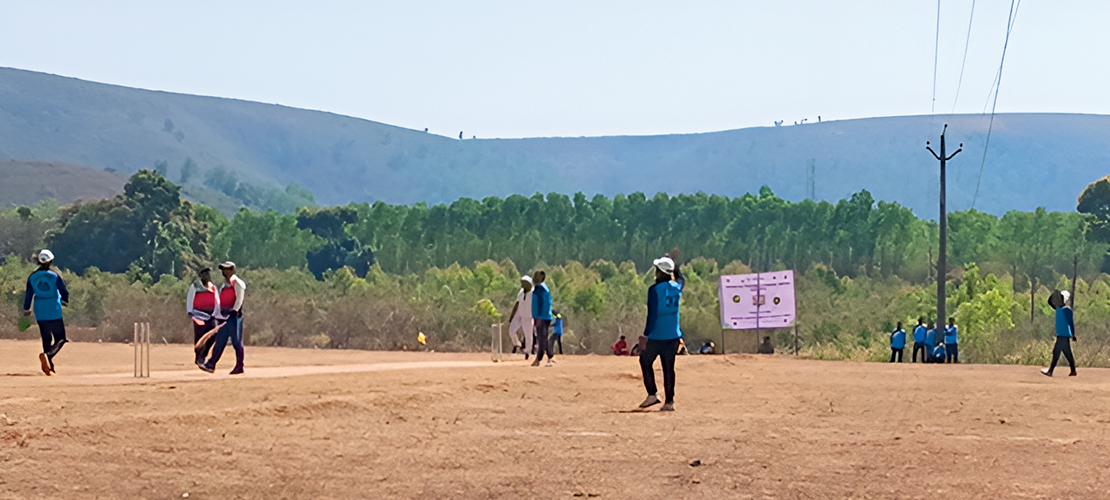
Vedanta’s investment in grassroots sports goes beyond infrastructure. In rural and tribal communities, sport is a vehicle for inclusion, identity, and economic opportunity. Our programmes span archery, football, karate, and traditional disciplines, with women-centric coaching centres created specifically to challenge the social norms that keep women off competitive pathways. We have made the inclusion of differently abled athletes a non-negotiable design principle, ensuring our sports programmes reflect the same diversity commitments we uphold across the rest of our operations.
Sports not only promote mental and physical well-being but also inspire discipline and unity, offering youth a pathway to national platforms and amplifying their potential. The revival of traditional sports forms part of our cultural preservation commitment, keeping indigenous heritage alive while simultaneously building community cohesion. Across Rajasthan, Goa, Odisha, and Jharkhand, our sports initiatives are producing athletes, not just participants.
Vedanta drives Aim 2 deliveries through a group-wide framework that each business unit translates into locally relevant programmes to address specific economic realities and livelihood gaps of their host communities. In FY 2025-26, this approach produced measurable outcomes across skilling, sports, and agriculture.
Vedanta has established placement-linked skilling pipelines across its business units, measured not only by training delivery but also by graduates’ ability to secure stable livelihoods and sustain household incomes.
Vedanta’s Group-wide sports investment, spanning football, archery, athletics, martial arts, and para sports, reached nearly 0.72 lakhs lives, making it one of India’s largest corporate-led grassroots sports movements.
Vedanta’s agricultural programmes address the structural constraints that keep farming households in a subsistence economy, including water scarcity, single-crop dependence, and weak market linkages.
Our CoP for Community Development provides the governance mechanism through which our skilling commitments are implemented consistently across business units. The CSR Management Committee provides oversight of all social investments, tracking performance against the Aim 2 target of 2.5 million individuals to be empowered by FY 2029-30. Annual VSAP audits assess programme effectiveness and ensure continuous improvement across all sites.
Providing upskilling and business incubation opportunities beyond operational requirements
Ensuring that skill development initiatives translate into sustainable livelihood generation
Need assessments and baseline surveys conducted every three years by independent agencies
The Community of Practice (CoP) implements the CSR action plan across business units
Oversight provided by the CSR Management Committee (ManCom) to ensure alignment and execution
CSR Committee ensures alignment with organisational sustainability goals
Tracking impact through project-specific performance metrics
Annual VSAP audits to assess effectiveness and ensure continuous improvement
Progress tracked against Aim 2 target of 2.5 million individuals by FY 2029-30
The initiative reinforces Vedanta’s commitment to placing community welfare at the centre of its business decisions by supporting sustainable livelihood opportunities for local farmers. By enabling agricultural capability building and income diversification, the programme strengthens community trust, deepens local partnerships, and contributes to maintaining Vedanta’s social licence to operate.
The Alternate Livelihood Opportunity Project (ALOP) focusses on creating sustainable livelihood avenues for rural communities through orchard-based farming under the Wadi model. The initiative supports small and marginal farmers by promoting fruit cultivation and providing access to high-quality saplings, technical guidance, and agricultural training. Through this intervention, farmers are encouraged to adopt diversified and sustainable farming practices that enhance productivity and income potential.
Agriculture remains the primary source of livelihood for many rural households; however, limited landholding sizes and low crop productivity often restrict income opportunities. By introducing horticulture-based farming systems and strengthening agricultural capabilities, the initiative enables farmers to build more resilient and sustainable livelihoods. The programme also reflects a broader approach of integrating community welfare considerations into operational decisions by supporting long-term socio-economic development in neighbouring regions.
Vedanta Sesa Goa has implemented the initiative in villages in Karnataka through its ALOP programme, working closely with local communities and development partners. The project promotes orchard development by distributing Alphonso mango grafts and supporting farmers in establishing fruit plantations on their land.
As part of the intervention:
Alongside plantation support, farmers receive guidance on cultivation techniques, orchard management, and sustainable agricultural practices to ensure long-term productivity and income generation.
Advance the welfare and socio-economic progress of women and children in host communities through targeted social development programmes that improve access to health, education, nutrition and livelihood opportunities
Community Engagement and Development
Strengthening community well-being through programmes focussed on women’s empowerment, child welfare, access to education and healthcare, and inclusive development initiatives that enhance quality of life in host communities
Zero
Hunger
Quality Education
Decent
Work and Economic Growth
The communities that host our operations are home to some of India’s most underserved populations: rural mothers with limited access to healthcare, children whose foundational years unfold in under-resourced Anganwadis, and women whose economic potential is constrained not by capability but by circumstance. We are committed to addressing these challenges through scalable, community-focussed interventions.
Our Aim 3, that seeks to uplift 100 million women and children, is delivered through two integrated programme pillars: Nand Ghar, our flagship initiative modernising India’s Anganwadi network since 2015; and a portfolio of women’s empowerment programmes, including Sakhi, Unnati, and Subhalaxmi, that build the financial, social, and entrepreneurial capabilities of rural women across our operational geographies.
Nand Ghar was born of a conviction that the Anganwadi system, which reaches India’s most vulnerable children and mothers, deserved infrastructure and resources befitting its role. Launched in collaboration with the Ministry of Women and Child Development and local NGOs, Nand Ghar modernises India’s existing Anganwadi infrastructure, transforming it into vibrant centres of community development. We did not build a parallel system. We invested in transforming the existing one. Every Nand Ghar centre we establish brings solar power, safe drinking water, clean sanitation, e-learning technology, and nutritious meals to communities where these were previously unavailable. Each centre operates on a dual-shift model: mornings provide pre-school education for children aged three to six through e-learning modules, play-based learning, and nutritious meals; afternoons serve as skill development and entrepreneurship centres for women. The same building serves two generations.
Today, over 12,769 Nand Ghars are operational across 17 states, with an MOU signed with the Government of Rajasthan to develop 25,000 centres across the state alone. We are currently reaching 0.89 million children and women, progress towards our mission of transforming the lives of 90 million children and women across India’s 1.37 million Anganwadis. Project Balvardhan in Rajasthan is addressing malnutrition at scale, currently supporting over 80,000 children and mothers in aspirational districts.
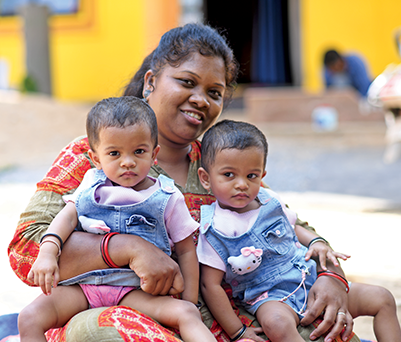
During Poshan Maah 2025, we engaged over 0.35 million families across 15 states under the theme “Poshan Se Pragati”, combining recipe demonstrations, parent training sessions, and community awareness campaigns designed to embed sustainable nutrition practices at the household level. This commitment extends to our public platforms as well. The 20th Vedanta Delhi Half Marathon brought together over 40,000 runners under the #RunForZeroHunger mission, mobilising over 5 million Poshan Packs for communities in need. What began as a sporting event in 2005 has become India’s largest run for social change, a demonstration that our nutrition agenda is not confined to our operational geographies but is a commitment to the community.
We believe that when a woman gains economic independence, the impact radiates outward: to her children, her household, her community, and eventually to the broader regional economy. This belief is the foundation on which Sakhi at Hindustan Zinc, Unnati at BALCO, and Subhalaxmi at Vedanta Aluminium are built. Across Rajasthan, Uttarakhand, Odisha, Chhattisgarh, and Jharkhand, these three programmes have reached over 46,163 women through nearly 2,174 Self-Help Groups (SHG) and 10 registered community-owned federations. Women are organised into SHGs that promote regular savings, internal lending, and collective decision-making, federated into three-tier institutional structures that ensure sustainability and scale.
Sakhi has mobilised 25,530 women across 2,174 SHGs, facilitating more than ₹ 149 crore in credit and ₹ 27.7 crore in savings. At the Mega Credit Linkage Camp at Pantnagar, ₹ 3.11 crore in credit linkage was provided to 1,538 women from 130 SHGs in partnership with Uttarakhand Gramin Bank, demonstrating what structured financial access can deliver when institutions are brought to where women actually are. The programme supports rural microenterprises under the brands Upaya (Apparel), Daichi (Edibles), and Gauam (Dairy), with 2,500 women in Chittorgarh alone trained in digital and financial literacy. Through its partnership with India Post Payments Bank, Sakhi extends banking and insurance services to remote villages that formal financial institutions have not historically reached.
We are equally focussed on ensuring that what women produce reaches the markets that will value it. Women entrepreneurs from our programmes now sell on Amazon and Flipkart and exhibit at the India International Trade Fair at Bharat Mandapam. The One Vedanta One Brand initiative creates a unified market identity for women-led enterprises while preserving the character of regional products. Beyond economics, the Uthori programme has reached over 0.3 million individuals with campaigns on domestic violence, child marriage, and women’s legal rights, and has established 129 dedicated groups of adolescent girls. Our Unchi Udaan initiative provides STEM education with 48% girl participation, equipping the next generation with skills for the future economy.
Aim 3 is delivered through the Anil Agarwal Foundation as the primary implementing agency for Nand Ghar and the broader women and child development portfolio. The CSR Management Committee provides governance oversight and tracks progress toward targets to reach 48 million women and children by FY 2025-26 and to have 29,000 Nand Ghars operational by FY 2029-30. Annual VSAP audits assess programme effectiveness and drive continuous improvement.
Delivery and outreach through modern Rural Mother & Childcare centres (Nand Ghars) established by the Anil Agarwal Foundation
Strengthening connectivity for community welfare interventions
Structured SHG federation model ensures institutional sustainability beyond programme tenure
The Anil Agarwal Foundation serves as the internal implementing agency for programme execution
Ensuring consistent implementation through a dedicated institutional framework
Community-owned federations ensure long-term ownership and accountability
Tracking outreach and utilisation of Nand Ghar services across communities
Monitoring programme impact through beneficiary-level data and periodic reviews
Annual VSAP audits assess programme effectiveness and drive continuous improvement
The initiative reinforces Vedanta’s commitment to community-centred development by supporting access to quality education for children in neighboring communities. By investing in educational support and learning resources, the programme strengthens trust with local stakeholders, fosters long-term community partnerships, and contributes to maintaining Vedanta’s social commitment.
Shiksha Amrut is an education-focussed initiative designed to improve access to quality learning opportunities for children from neighbouring communities. The programme supports the operation of two schools and two remedial coaching centres, while also providing essential educational resources and learning support to students. Through these interventions, the project aims to strengthen foundational learning and ensure that children have access to an enabling educational environment.
Access to quality education plays a critical role in shaping the future of children and strengthening long-term community well-being. Many students in rural communities face barriers such as limited educational resources and inadequate learning support. By providing structured academic support, essential learning materials, and opportunities for holistic development, the initiative contributes to improving learning continuity and educational outcomes for children.
The initiative is implemented through a combination of institutional education support and targeted student-focussed programmes. Two community schools are supported under the project, along with remedial coaching classes that help students strengthen their academic foundations and address learning gaps.
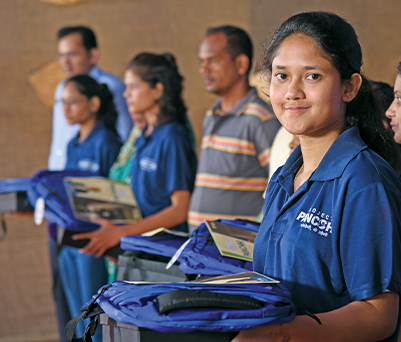
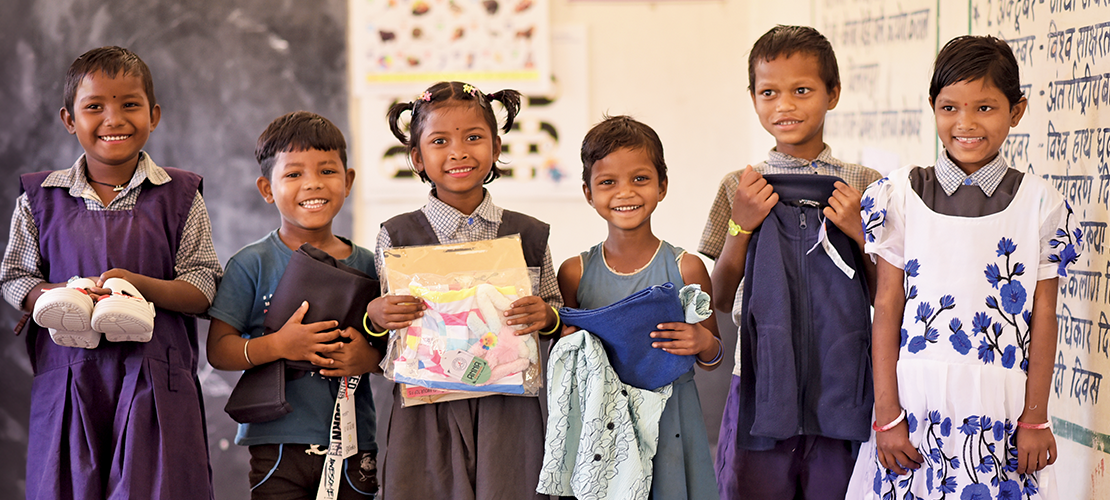
In addition to classroom support, the programme provides Teaching and Learning Materials (TLM), school uniforms, shoes, and other essential educational resources. Students also benefit from summer camps and engagement activities designed to promote holistic learning and personal development.
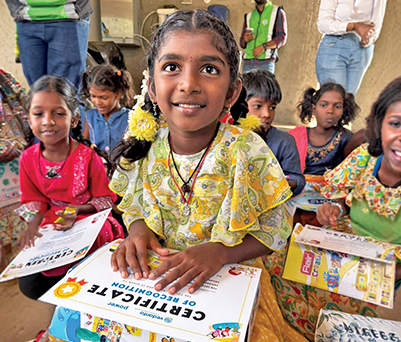
During FY 2025-26, the programme supported 290 students and has, to date, benefited 1,911 students across two schools through a range of educational interventions, including the distribution of learning materials and uniforms, as well as participation in educational activities and camps.
Sakhi has grown from a self-help group formation programme into one of India’s most substantive corporate led women’s economic empowerment initiatives. For Hindustan Zinc, operating across Rajasthan’s mining belt where women have historically been excluded from formal financial systems, the scale of credit now flowing through Sakhi’s network, and the depth of enterprise formation it has enabled, position this programme as a measurable contributor to Vedanta’s ESG commitments on gender inclusion and community development.
Sakhi organises rural women into Self Help Groups, builds federations that give those groups institutional weight, and connects them to formal financial systems, enterprise opportunities, and markets. The programme spans financial literacy, microenterprise development, digital skilling, and social awareness, structured to move women from savings discipline through to credit access and independent income generation.
Rural women in Rajasthan’s mining districts face compounded barriers: limited banking infrastructure, social norms that restrict financial decision-making, and no formal pathway from household savings to enterprise credit. Sakhi dismantles each barrier systematically, through institutional structures that give women financial identity, credit history, and the peer and federation support to sustain enterprises over time. Economic empowerment and social change are treated as inseparable: the Uthori theatre group runs community awareness programming on female foeticide, domestic abuse, and child marriage alongside the financial programme, recognising that income independence alone does not produce lasting transformation.
Sakhi operates through a federated SHG architecture across 200+ village organisations, with group-level savings and governance feeding into cluster federations that interface with banks and India Post Payments Bank, giving members access to credit, insurance, and digital payment infrastructure.
Digital Sakhis, trained as community level financial service points, extend this reach into villages where formal banking remains distant.
Enterprise development support has produced tangible ownership milestones, including a women operated BPCL petrol pump in Rajasthan. Sakhi Utsav 2025 brought over 7,000 women across five districts together, a convergence of enterprise showcasing, federation strengthening, and peer learning that reflects the programme’s scale and the depth of participation it has built.