
FY 2025-26 was a year of decisive execution and transformational progress for Vedanta. We successfully commissioned several strategic growth projects across our portfolio, strengthening our capacity, enhancing competitiveness, and creating a robust foundation for the next phase of growth. Record operational performance with highest-ever aluminium, alumina and mined-metal at Zinc India alongside a 5-year lowest cost of production further fortified our leadership across scale, cost and asset profile. These achievements underscore the strength of our integrated business model, operational excellence, and relentless focus on productivity, innovation, and resource efficiency. Our ambition is not only to grow our business, but to create enduring economic, social, and environmental value that contributes meaningfully to India’s development journey and the global transition to a more sustainable future.
FY 2025-26 was a landmark year for Vedanta, reflecting the strength of our operating model, disciplined financial management, and unwavering focus on value creation. We delivered record revenue and EBITDA, with growth of 15% and 29%, respectively, underpinned by operational excellence, cost leadership, and strong execution across our businesses. Our commitment to prudent capital allocation and deleveraging further strengthened the balance sheet, with Net Debt to EBITDA improving from 1.22x to a best-in-class 0.95x, reinforcing our financial resilience.
The successful completion of our landmark demerger represents a defining milestone in the Vedanta 2.0 journey. By creating focussed, pure-play businesses with distinct growth pathways, we are unlocking greater value, enhancing operational agility, and building a stronger platform for sustainable long-term growth.
Q FY 2025-26 has been described as a breakthrough year for Vedanta. What were the defining drivers behind this record performance?
The fiscal 2025-26 was a tale of two halves. The first half unfolded against a complex backdrop and global uncertainty. Persistent tariff-related uncertainties and conflicts in the Middle East and Europe created substantial turbulence in the commodity market. However, as the year progressed, demand for metals and energy strengthened with prices remaining favourable.
The Indian markets demonstrated strength. Strong economic growth, alongside investments in infrastructure, manufacturing, and energy transition, ensured steady domestic demand for minerals.
Against this backdrop, we delivered the best-ever performance. We maintained a sharp focus on execution and strengthening operational rigour. Our business also benefited from a sharp rise in commodity prices witnessed during the second half.
This performance was underpinned by the following drivers:
FY 2025-26 culminated into a record year for Vedanta marked by historic highs on all fronts including financial, operational and value creation. We delivered our best ever EBITDA and PAT alongside unrelenting focus on deleveraging, evident through a sub-1x (0.95x) Net Debt/ EBITDA (vs 1.22x in FY 2024-25).
Q Commodity prices have witnessed significant volatility in recent quarters. What safeguards are in place to sustain performance and protect margins?
The commodity markets have always been cyclical. What distinguishes the current environment is the scale, frequency and multi-variable nature of volatility. Prices are witnessing sharp swings in a matter of days. In our experience, this is one of the most complex markets to navigate.
Vedanta’s resilience stems from diversification, vertical integration and domestic demand exposure. Our portfolio spans 15+ commodities, which are primarily consumed within India, providing resilience against global uncertainty. Our backward integration and cost leadership further reduce vulnerability to price volatility.
Our disciplined approach to hedging provides cashflow certainty, downside protection against volatility, while retaining meaningful exposure to favourable pricing.
Q Can you walk us through the key operational and financial highlights across Vedanta’s core businesses during the year?
FY 2025-26 was marked by broad-based performance across all major verticals. Key highlights of the performance include:
The business attained the highest-ever production for alumina as well as aluminium. Alumina volumes rose by 48% to 2,916 kt, while that of aluminium by 1% to 2,456 kt. Hot metal cost at US$ 1,752/t was the lowest in the last 5 years, while VAP output increased to 60% of aluminium production. This helped achieve the best-ever quarterly and yearly EBITDA margins at 1,512 US$/t in Q4FY 2025-26 and 1,154 US$/t in FY 2025-26. Under our Green product initiative, this year, we sold the highest-ever volume of low carbon Aluminium at ~91 kt.
Zinc India recorded the highest-ever mined metal at 1,114 kt and while refined metal production stood at 1,048 kt, respectively. The business strengthened its global cost leadership through cost reduction and operational optimisation measures. As a result, refined metal production costs reduced by 9% to US$ 959/t, which is the lowest in five years. Saleable silver production stood at 627 t, and together with 75% higher average silver prices, contributed more than 40% to Zinc India’s profits.
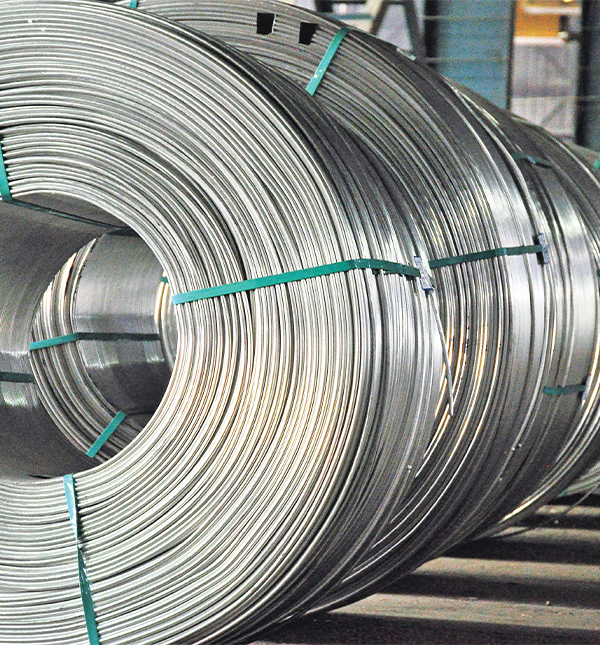
The business steadily ramped up with quarter-on-quarter growth in production volumes. We achieved production growth of 27% to 225 kt. The increase in production compared to FY 2024-25 was mainly driven by higher tonnes milled and higher feed grade. However, then ensuing gains were partially offset by exchange rate movements. Production for Gamsberg was at 185 kt, 39% higher Y-o-Y. This is mainly attributable to higher tonnes treated supported by ramp-up in waste mined to 81 Mnt in FY 2025-26 and higher grades.
The average gross production in the business was at 87.2 kilobarrels of oil equivalent per day down 16% y-o-y, owing to natural field decline. This was achieved through infill well drillings and other interventions. At our Mangala oil field, one of the largest ASP implementations globally on a single field is reaching its final stage of commissioning. Infill drilling was carried out in Rajasthan block across Mangala, Bhagyam, Aishwariya, Tight Oil (ABH), Tight Gas (RDG) & Saraswati fields to sustain volumes. 21 wells were drilled and 31 wells were hooked up during FY 2025-26 across all assets.
We successfully announced the gas discovery in Ambe Block, marking the first Discovered Small Field (DSF) Block to be monetised on India’s West Coast. The discovery has added ~ 13 mmboe of Reserves and Resources (R&R).
Our saleable iron ore production stood at 6.5 tonnes and the value-added business achieved a record pig iron production of 895 tonnes. Our resource base was strengthened with the receipt of a Letter of Intent for the Janthakal mine in Karnataka.
The saleable production at ESL Steel stood at 1,301 kt, with the highest-ever quarterly billet production of 287 kt. The growth was driven by enhanced operational efficiency and reduced maintenance downtime.
Ferro Chrome production increased by 21% due to improved mining production driven by the reactivation of Kalarangiatta mine.
Our Power business outperformed expectations despite a demand moderation in some regions due to the monsoon. Sales volume increased 29% to 16,769 million units. The growth was primarily driven by the addition of 1.3 GW of new capacity at Meenakshi and Athena power plants.
Q Vedanta has undertaken a significant capex cycle and is expanding the portfolio of minerals to drive growth. What underpins your confidence in this strategy?
Our confidence rests on three realities: demand, relevance and execution.
First, the demand environment is exciting. India is in the middle of a multi-decade economic expansion, all set to become the world’s growth epicentre. The nation will witness an unparalleled scale of infrastructure creation, industrialisation, rising energy demand, transition, and much more. Each of these developments is fundamentally metal-intensive, creating a structural and long-term demand opportunity for domestic minerals.
Second, our portfolio is aligned with the demand landscape. A majority of our revenues are already linked to energy transition and infrastructure-related minerals. At the same time, we have built exposure in newer critical minerals like nickel, chromium, cobalt, vanadium, manganese, tungsten, gold, and rare earth elements. They will enable tapping opportunities in future-oriented industrial, technology and digital applications.
Third, is our proven track record of executing high IRR projects and maximising returns for all stakeholders. Our recently commissioned capex across aluminium, zinc and power has improved our ability to cater to demand, while vertical integration projects have strengthened raw material security.
Our tier-1 assets provide immense potential for reinvestment to unlock next leg of growth with transformational projects to double Zinc India Capacity to 2 MTPA, Copper Smelter in Saudi Arabia, Gamsberg Phase-3 and another 3 MTPA capacity addition at our aluminium business.
Here is where things get interesting. Vedanta invested ₹ 15,072 crore in capex during FY 2025-26 in portfolio expansion encompassing all businesses. We will continue to pursue sustainable and disciplined growth. Imagine the value creation potential that we can unlock.
Q Where do Vedanta currently stand on the capacity expansion roadmap? Which businesses will be contributing to the next leg of growth and value illumination for the Group?
Our capex cycle has moved from investment to execution and harvest phase, with major expansions commissioned and ramp-up in progress.
We target to achieve 3 MTPA smelting capacity by FY 2027-28. This year, we commissioned the 1.5 MTPA Train 2 at Lanjigarh refinery, enhancing total alumina capacity to 5 MTPA. We also achieved a significant milestone with first metal from India’s largest 525 kA smelter at BALCO and commissioning of Billet & PFA Projects at Jharsuguda as well as the Rolled Product, PFA, & 1st Billet line at BALCO. Our smelter capacity is on track to ramp-up to 2.88 MTPA, with the ramp-up to 435 KTPA at the new BALCO smelter during FY 2026-27.
Value-added product capacity increased to 70% of total aluminium capacity. We are on track to reach 90% by FY 2026-27.
Significant progress has been made towards backward integration and low-cost raw material availability to strengthen cost leadership in aluminium operations. We are now very close to commissioning Kuraloi coal mine, while the Sijimali Bauxite and Ghogarpalli Coal mines are expected to commence operations during the latter half of FY 2026-27. Following this, we will have key raw materials secured from within 100 kms from plants covering 100% of our coal requirements and contributing meaningfully to bauxite security.
Zinc India plans to increase zinc-lead smelting capacity from 1.14 MTPA to 1.38 MTPA and silver capacity from 800 TPA to 830 TPA. The business commissioned the 160 KTPA Debari roaster and completed the de-bottlenecking projects at Chanderiya and Dariba smelters, which added 21 KTPA to our refined zinc capacity. Further, Board approval has been secured for India’s first Zinc tailings reprocessing plant with a 10 MTPA capacity, reinforcing our commitment to sustainability.
At Zinc International, the Gamsberg Phase-II project is nearing completion. It will add 200 KTPA incremental capacity and enhance total MIC capacity to 500 KTPA.
Energy security and portfolio diversification are important focus areas. Aligned with this, we have expanded our merchant thermal power capacity by 1.3 GW during the year to reach 4,180 MW, with another 600 MW planned for FY 2026-27.
In our Ferrochrome business, we plan to add a 330 KTPA greenfield smelter and ramp-up smelter plant production to 500 KTPA by FY 2027-28. We received approval for the enhanced production from Ostapal Mine up to 530 KTPA, and expect to commence underground operations in FY 2026-27.
In the iron and steel operations, we plan to enhance iron ore mining capacity to 17 MTPA and nearly double steel capacity at Bokaro to 3.5 MTPA by FY 2027-28 supported by captive iron ore availability. This will take our total hot metal capacity across Goa and Bokaro to 4.7 MTPA by FY 2027-28.
At the copper business, we are on track to operationalise the 155 KTPA rod mill at Ras-Al-Khair in Saudi Arabia.
At Oil and Gas business, we have a capex outlay of ~₹ 350 million for FY 2026-27 that will help up deliver near term volumes through initiatives like ASP Injection at Mangala, drilling in tight oil reservoirs as well as focus on onshore and offshore exploration initiatives across our diverse portfolio of 44 blocks.
As these projects ramp up, we expect strong volume growth combined with improved cost structures, resulting in margin expansion.
Q Vedanta has made visible progress on deleveraging and received rating upgrades. How does this strengthen the Company’s strategic flexibility?
Deleveraging is a priority for us. In the last couple of years, we have reduced net debt meaningfully. At the Group level, Vedanta Resources Limited (VRL) brought down net/EBITDA from 3.3x as on 31 March 2020 to 1.6x as on 31 March 2026, with a net debt of US$ 4.9 billion.
At the company level (VEDL), the net/EBITDA has reduced from 1.22x as on 31 March 2025 to 0.95x as on 31 March 2026. The net debt now stands at ₹ 53,254 crore with cash and cash equivalents of ₹ 28,485 crore.
These efforts have improved our credit rating, allowing us to refinance debt at a lower cost with extended maturities. Further, our cost of borrowing has declined to <9% with an average maturity of ~3 years. This reduces financial risk and provides us with strategic flexibility to pursue growth opportunities.
Q With significant growth capex and deleveraging ongoing, how is the Company balancing these priorities with shareholder returns?
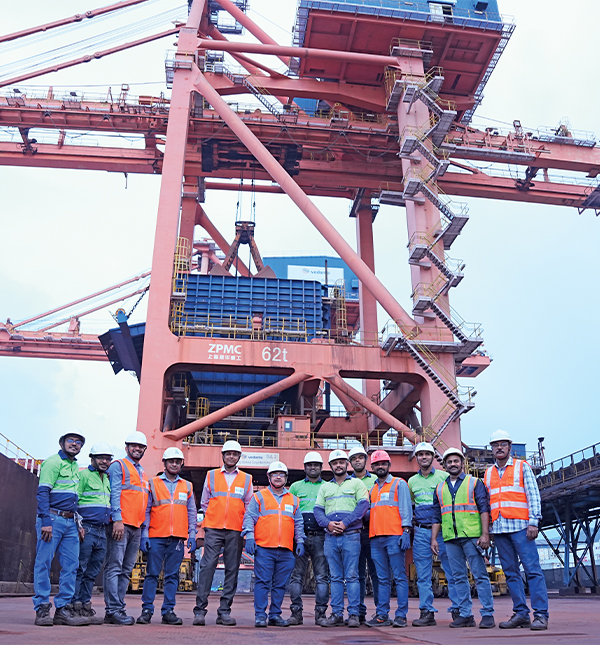
Vedanta delivered total shareholder returns of 49% in FY 2025-26, which is almost 5x of the overall Nifty Index and 2.1x of the Nifty Metal Index. This puts us among the top 2 wealth creators in the Nifty 100 Index.
This does not come as a surprise because every investment decision we make is carefully deliberated and evaluated against stringent return thresholds. We prioritise projects that strengthen competitiveness, while ensuring a minimum internal rate of return of 18% and clear payback visibility. Our focus on ongoing cost optimisation and deleveraging has further improved operational rigour and contributed to growing surplus cash flows. This allows us to channel funds in balance sheet strengthening as well as growth capex.
In FY 2025-26, our business generated a healthy free cash flow of ₹ 11,095 crore, post our highest ever capex spends during the year.
In the coming years, as major capex projects come on stream, free cash flow generation is expected to improve further, opening potential to scale shareholder returns.
Q Can you elaborate on the progress made across ESG priorities and how they strengthen long-term competitiveness?
ESG is integral to Vedanta’s strategy. It is both humbling and inspiring to see the transformative change that we are bringing across societies, biodiversity and the planet. Currently, more than 300 high-impact initiatives are ongoing targeting areas like net carbon zero, health and safety, innovation and circular economy, water and diversity, equity and inclusion, among others.
We scaled new peaks in renewable energy (RE) usage, over 50% increase in renewable energy usage to 3.97 billion units (BU) in FY 2025-26 as compared to the previous fiscal year, avoiding 3 million tonnes of carbon dioxide emissions during the year. reduced metals intensity by 15% – from a FY 2020-21 baseline of 6.45 tCO2e/tm to 5.51 tCO2e/tm in FY 2025-26 – reflecting operational efficiency. Vedanta has also utilised 365 kilo tonnes of biomass as an alternative fuel, reducing emissions by an estimated 0.5–0.6 million tonnes of carbon dioxide. We have 1.9 GW of RE delivery agreement in place.
The water positivity ratio stood at 0.64x and HVLT waste utilisation at 98%. To scale waste management efforts, Zinc India plans to build India’s first tailing reprocessing plant of 10 MTPA at Rampura Agucha.
Workforce safety remains the highest priority and a non-negotiable aspect. With initiatives like the implementation of critical risk management and digital monitoring, we continue to improve the safety culture. TRIFR across the operations was at 1.3. Tragically, we lost 4 colleagues this year, a loss that weighs heavily on all of us. It is a reminder that safety must be top priority, and we continue to redouble our efforts.
We continued with our initiatives of empowering communities with investments of about ₹ 419 crore during the year, positively impacting 7.8 million lives.
Q Where does Vedanta stand on its digital transformation journey? How is the company utilising advanced technology to advance its productivity and sustainability performance?
Vedanta has emphasised its commitment to working closely with startups, leveraging emerging technologies early, and staying at the forefront of industrial transformation rather than adopting solutions reactively.
To institutionalise this approach, Vedanta launched Vedanta Spark, its global corporate innovation, accelerator, and ventures platform, and subsequently strengthened this capability through V Spark Deeptech Ventures. Together, these platforms enable Vedanta to partner with startups and deploy deep-tech solutions across mining, metals, energy, manufacturing, and ESG domains – ensuring innovation is outcome-driven and scalable, not experimental.
One of the primary technology themes used in Vedanta Group is asset monitoring, within which computer vision has emerged as a key enabler. In parallel, Vedanta has established predictive maintenance of rotary and critical equipment as a Group-wide technology focus. We are also applying AI beyond plant operations into procurement and inventory decision-making.
In Aluminium and BALCO operations, innovation is deeply embedded into the core metal making process. Wireless IoT-based cell house temperature monitoring enables real-time tracking of critical thermal parameters across electrolytic cells.
In energy operations, we are using AI-driven energy intelligence to monitor generation and consumption across multiple plants and dynamically route power to deficit units. This is complemented by auxiliary power consumption optimisation, to identify over consuming assets in real time.
Q Technology and critical minerals is one of the key pillars of Vedanta 2.0. How do you envision its role in shaping the Company’s future?
The ‘Vedanta 2.0’ strategy aims to align the company’s core strengths with India’s strategic needs in energy transition, advanced manufacturing, and clean technologies. Reinforced by a tier-1 asset portfolio and historic high operational and financial performance in FY 2025-26, Vedanta 2.0 enters FY 2026-27 marking the evolution into a more agile, streamlined and future-ready organisation. Under its transformation agenda, Vedanta 2.0, the company is reshaping 70% of its portfolio to focus on energy transition metals and clean energy. This forward-looking strategy places Vedanta in a key position to support India’s goals of building a secure, self-reliant critical mineral supply chain.
Beyond traditional minerals, Vedanta is actively exploring the integration of critical minerals, into its existing value chains, creating new synergies across its businesses. Growth is being driven not only by resource expansion but also by an emphasis on technology and innovation. The company is investing in AI (Artificial Intelligence)-driven systems to improve operational efficiencies and adopting automation for better energy management. Strategic acquisitions, process innovation, and data-led decision-making are key pillars of this next-generation growth plan.
We have a portfolio of 10 composite licenses for critical minerals in India spanning various minerals like Copper, Gold, Nickel, Tungsten etc. We are focussed towards accelerating exploration across these blocks.
These strategic imperatives position us to stay ahead of the curve, strengthen our competitive edge, and shape the future of the industry responsibly.


