
The year 2025-26 was marked by moderate and uneven global economic growth, as economies adjusted to increased trade protectionism, financial market volatility, and ongoing geopolitical uncertainties. While inflation eased and recession risks declined, structural challenges continued to shape the global outlook.
The last fiscal started with President Donald Trump’s sweeping “Liberation Day” tariffs announcements in April 2025 introducing a baseline 10% global tariff alongside specific “reciprocal” tariffs scaling up to 50% for countries with high trade surpluses. This was followed by a series of negotiations, multiple changes in tariff rates and heightened trade tensions among the countries as they attempted to make trade deals with the US to achieve a favourable tariff structure. However, in February 2026, the US Supreme Court ruled the initial tariffs illegal, stating that the emergency powers cited under the International Emergency Economic Powers Act (IEEPA) did not permit the President to bypass Congress to regulate international commerce. In response to the Supreme Court’s decision, the US administration instituted a 10% blanket global tariff under Section 122 of the Trade Act of 1974, which was again ruled out by the U.S. Court of International Trade (CIT) in May 2026.
The year was marked by increased number of conflicts amidst failed attempts to end Russia-Ukraine war and fragile ceasefire in Gaza. New frontier opened in Middle East when the US, Israel and Iran engaged into the 12-Day War intensive conflict in June 2025 involving Israeli strikes on Iranian military and nuclear sites, followed by direct U.S. intervention.
Towards the end of the fiscal year, the fierce war broke out in Middle East between Iran and the US-Israel which rattled global energy market.
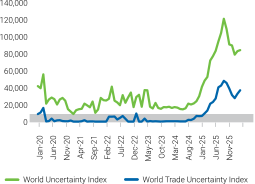
All these things culminated in heightened uncertainty regarding global business environment which is reflected in World Uncertainty Index which touched all-time high in September 2025, dwarfing the previous spikes like Covid-19 pandemic of 2020 or Global Financial Crisis of 2008.
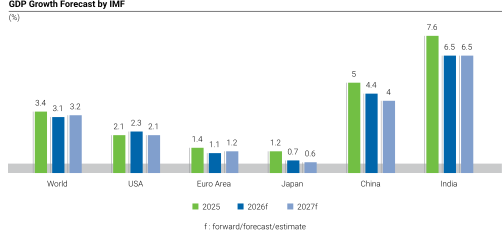
Despite all the odds, global economy expanded by 3.4% in 2025, indicating stable but modest expansion. Growth remained strong in emerging economies which grew by 4.4%, but moderate in advanced economies with 1.9% rise in 2025. The United States maintained steady growth of 2.1% driven by consumption and technology investment. China managed to achieve the target 5% growth, supported by policy measures but constrained by real estate issues. India remained one of the fastest-growing major economies at 7.6%. Euro Area saw slower growth of 1.4% due to structural weaknesses. Overall, global growth was resilient but remained below long-term averages.
Pace of decline in inflation slowed down in 2025 and global inflation largely remained steady. Inflation in the US remained above target level while that in India and EU started moving up during Q4 of FY 2025-26. As a result, the Federal Reserve kept its benchmark interest rate unchanged at 3.50–3.75% during meetings in January, March, and April in 2026 while the European Central Bank did not reduce interest rates after June 2025.
Global manufacturing in 2025 experienced a slow but steady recovery, characterised by moderate output growth. Global manufacturing PMI consistently remained in expansionary zone since August 2025 and reached 52.6 in April 2026 - marking a 49-month high and signalling a strengthened expansion in worldwide manufacturing output despite rising geopolitical risks. Global trade in 2025 reached a record high of US$ 34.65 trillion in total value, a 7% increase over 2024. Growth was driven by strong demand for electronics and AI-related hardware. However, sustenance of such positive developments are overshadowed by the ongoing war between Iran and the combined forces of US and Israel.
The US-Iran war which started since 28 February 2026 has emerged as a major geopolitical shock with wide-ranging consequences for the global economy. Given the strategic importance of the Middle East in global energy supply and trade routes, the conflict has affected growth, inflation, trade, and financial stability worldwide.
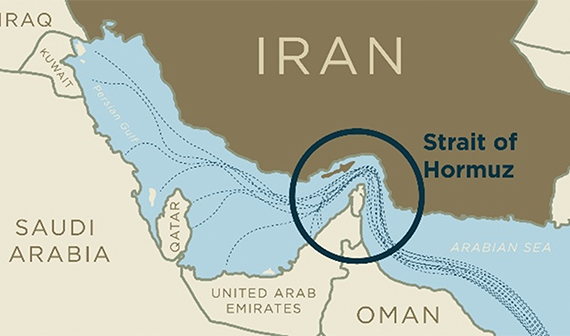
The most immediate impact has been a sharp rise in global oil prices. The conflict disrupted the Strait of Hormuz, through which about 20% of global oil supply flows. Oil prices surged above US$ 100 per barrel in some phases. Rising oil and commodity prices have led to global inflation pressures. Many economies face the risk of imported inflation due to energy dependence. Higher cost of living (fuel, food, utilities), reduced purchasing power, pressure on low-income households.
Disruptions to shipping through the Strait of Hormuz have impacted several commodity markets, affecting both energy and related sectors. The Gulf region, which accounts for about 8% of global aluminium supply, is also affected. Roughly 5 million tonnes are shipped annually through the Strait from countries like Bahrain, Qatar, Saudi Arabia, and the UAE, impacting construction, manufacturing, and energy technologies.
Fertiliser supply is especially vulnerable, with over 30% of global urea trade and around 20% of ammonia and phosphate shipments passing through the Strait. This raises concerns for food prices and security. There are also indirect energy implications, as some countries rely on imported LNG to power fertiliser production.
In addition, nearly half of global seaborne sulphur trade moves through this route. Sulphuric acid derived from it is essential for fertilisers, chemicals, petroleum refining, and processing key minerals such as copper, nickel, and zinc.
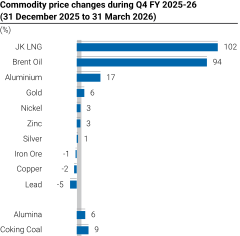
Oil and gas prices almost doubled and aluminium price also jumped due to supply disruption in Q4. While copper and silver prices reached all-time high earlier in the quarter, they retreated in the later part of the quarter due to profit booking, strengthening US dollar, fear of interest rate hike and concern of adverse impact of manufacturing.
The United States and Iran agreed to a fragile, two-week ceasefire on 8 April 2026, following which oil and gas prices pulled back. However, the ceasefire is currently in a state of tension following the failure of high-stakes negotiations. Resumption of the war and continuation of that may keep the commodity market extremely volatile.
The demand outlook has weakened as the conflict in the Middle East has disrupted fuel supplies, which will take time to recover once the Strait of Hormuz is fully reopened. But even that will not lead to a speedy return to normal as oil and gas production facilities and infrastructure have been damaged. As such, the fallout from the conflict could be felt for many months as it will take time for other producers to increase production to make up for the lasting losses in incurred by the affected Middle Eastern countries.
Central banks face a policy dilemma as inflation is likely to rise due to oil shocks while growth slowing due to economic uncertainty. This could delay interest rate cuts and possible tightening if inflation persists. This creates risks of stagflation which is a condition of low growth and high inflation, slower growth, and financial instability.
World industrial production growth for 2026 has been revised down from 3.1% to 2.5% as a result of the fallout of the conflict. With Asia and Europe highly dependent on Middle East oil and gas, higher-for-longer energy prices, energy rationing and the inflationary implications of these, means that there is a risk that broader markets turn bearish and that weighs on sentiment in the base metals.
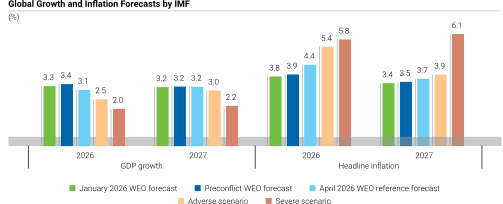
In the baseline outlook by IMF, global growth is expected to reach 3.1% in 2026 and 3.2% in 2027. This represents a slowdown from the roughly 3.4% pace observed in 2024-25, with growth stabilising at a similarly lower rate over the medium term – well below the historical average of 3.7% recorded between 2000 and 2019. Compared with the January 2026 WEO Update, the 2026 forecast has been revised down by 0.2 percentage points, while the 2027 projection remains unchanged. Meanwhile, global headline inflation is projected to rise to 4.4% in 2026 before easing to 3.7% in 2027, with both figures revised upward.
In a downside scenario characterised by larger and more sustained increases in energy prices, global growth would weaken further to 2.5% in 2026, while inflation would climb to 5.4%. Under a more severe scenario involving greater damage to energy infrastructure in the conflict-affected region, the consequences would intensify: global growth would fall to around 2% in 2026, and headline inflation would exceed 6% by 2027. Emerging market and developing economies would bear a disproportionately larger burden, experiencing impacts nearly twice as severe as those faced by advanced economies.
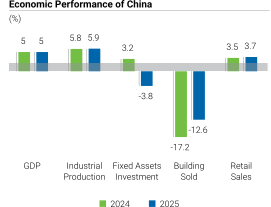
China’s economy in 2025 achieved 5% growth, driven by robust manufacturing and exports despite persistent deflationary pressures, a prolonged property slump, and weak domestic demand.
In industrial sector, high-tech manufacturing outpaced the overall growth rate, with significant expansion in sectors like civil drones, embedded intelligence, and industrial robots. Fixed assets investments (FAI) registered a negative growth of 3.8% in 2025 – first time since 1989, mainly dragged down by 17% degrowth in investment in real estate sector. China’s “anti-involution” drive to curb “race-to-the-bottom” competition, overcapacity, and destructive price wars, particularly in manufacturing also severely impacted FAI in manufacturing which could merely grew by 0.6% in 2025.
Depressive situation in property market extended in 2025 as well with 12.6% decline in building sold which calls for more structured and extended policy support from the Chinese government.
In March 2026, China adopted 15th Five-Year Plan (2026-2030) which focusses on technological self-reliance, “new quality productive forces,” and security-driven development. It sets a pragmatic 2026 GDP growth target of 4.5-5.0%. This shift prioritises high-quality development, technological self-reliance (AI, quantum computing), and service-sector growth over rapid speed. China has also stepped up efforts to launch major projects and boost investment in new types of infrastructure. The plan aims to manage domestic structural adjustments and weak demand, marking the lowest target in decades.
IMF has projected China’s GDP growth to decelerate to 4.4% in 2026 and 4% in 2027 from 5% in 2025 due to ongoing structural issues, specifically a prolonged property sector downturn, weak domestic consumption, an ageing labour force, and mounting trade tensions.
The U.S. economy in 2025 showed steady and broad-based growth – growing by 2.1%. This was driven mainly by strong consumer spending, a robust labour market, and AI-led technological investment. Despite challenges from high interest rates and global risks, the economy remained resilient and one of the strongest among advanced nations. Household consumption remained the largest driver of GDP, supported by strong labour market, rising wages and excess savings from previous years. US unemployment rate remained at 4.3% by the end of April 2026. But inflation rate jumped to 3.8% in April from 2.4% during January and February 2026 from rising energy cost.
US Fed adopted a cautious, data-dependent approach to interest rates in 2026, balancing inflation risks with concerns about economic growth due to ongoing Middle East war and rising fuel cost. As of early 2026, the Fed has kept the federal funds rate at 3.50%–3.75%. The Fed’s “dot plot” indicates only one rate cut in 2026 of 25 basis points, indicating a cautious “higher-for-longer” stance.
In February 2026, the U.S. Supreme Court ruled that President Trump’s tariffs, imposed under the International Emergency Economic Powers Act (IEEPA), were unlawful, ruling that only Congress has the authority to set import taxes. However, Donald Trump immediately activated Section 122 of the Trade Act of 1974, which allows for a temporary 15% general tariff to handle balance-of-payments issues. A 10% general tariff was subsequently slated to take effect by 24 February 2026, which is temporary (150 days) without Congressional approval.
The US economy is likely to be least affected by the Middle East war. IMF expects US GDP to grow by 2.3% in 2026 and 2.1% in 2027.
The European Union’s real GDP increased by 1.6% in 2025. This represented an acceleration from the 1.2% growth recorded in 2024. Economic performance varied significantly across the bloc, with smaller and island nations generally outpacing larger economies. Domestic demand remained a primary driver, supported by a resilient labour market and real wage increases as inflation cooled. Inflation stabilised around 2.1% for the year, significantly lower than previous peaks, which helped restore consumer purchasing power. As a result, ECB kept interest rates unchanged at 2.15% since June 2025. Manufacturing activities considerably improved as reflected in PMI reading which moved up to 52 in April 2026.
However, the war in the Middle East has brought renewed uncertainty and the economic outlook is clouded again. Disruptions to shipping through the Strait of Hormuz, a key route for global oil and liquefied natural gas (LNG) trade. The baseline projections of IMF foresee annual real GDP growth of 1.3% in 2026 and 1.4% in 2027 and gas price-led cost push weighs on cost of living.
India’s economy stayed resilient in 2025-26, with real GDP growth of 7.6% under the Second Advance Estimates (base year 2022-23). Growth was mainly driven by strong private consumption and fixed investment, while net external demand remained weak. On the supply side, real GVA rose 7.7%, supported by robust services and manufacturing.
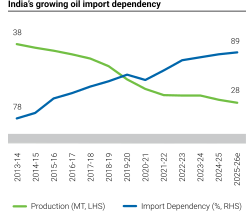
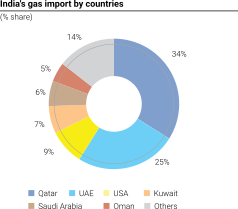
However, the ongoing conflict has increased volatility in global energy and commodity prices, creating uncertainty for the near-term growth and inflation outlook of India. Roughly 45% of crude oil and 60% of natural gas imports of India originate from the Middle East, making India’s energy security highly vulnerable to regional conflicts and shipping disruptions in the Strait of Hormuz. Higher global energy costs have pushed up prices of fuels like premium petrol, LPG, and industrial diesel.
The Indian rupee hit an all-time low of 95.75 against the US Dollar on 14 May 2026, driven by intense pressures from the Middle East conflict, surging oil prices, and significant foreign capital outflows.
Indian domestic industries also initially experienced disruptions due to constrained availability of natural gas, as the Indian government had prioritised natural gas and LPG allocation to households and transport over industrial users following supply disruptions in the Strait of Hormuz. Subsequently, government gradually increased the allocation of bulk non-domestic LPG to industrial sectors closure to their pre-March 2026 consumption levels.
The Government of India has launched several emergency measures to support domestic industries and exporters facing disruptions due to the US-Iran conflict and related volatility in West Asia.
Looking ahead to 2026-27, high energy and commodity prices and potential supply disruptions (e.g., Strait of Hormuz) may weigh on production. Global financial volatility and trade disruptions could also impact growth, especially exports due to higher shipping and insurance costs. However, strong services momentum, GST rationalisation, rising manufacturing capacity use, and healthy corporate and financial balance sheets should support demand. With government initiatives to boost domestic manufacturing, GDP growth is projected at 6.9% (Q1: 6.8%, Q2: 6.7%, Q3: 7.0%, Q4: 7.2%) by RBI, higher than 6.5% projected by IMF. Risks remain from prolonged conflict, wider geopolitical tensions, energy infrastructure damage, and weather shocks.
Taking these factors into account, CPI inflation for 2026-27 is projected at 4.6% (Q1: 4.0%, Q2: 4.4%, Q3: 5.2%, Q4: 4.7%). Upside risks remain due to persistently high energy prices from the West Asia conflict and potential El Niño conditions that could affect the southwest monsoon.