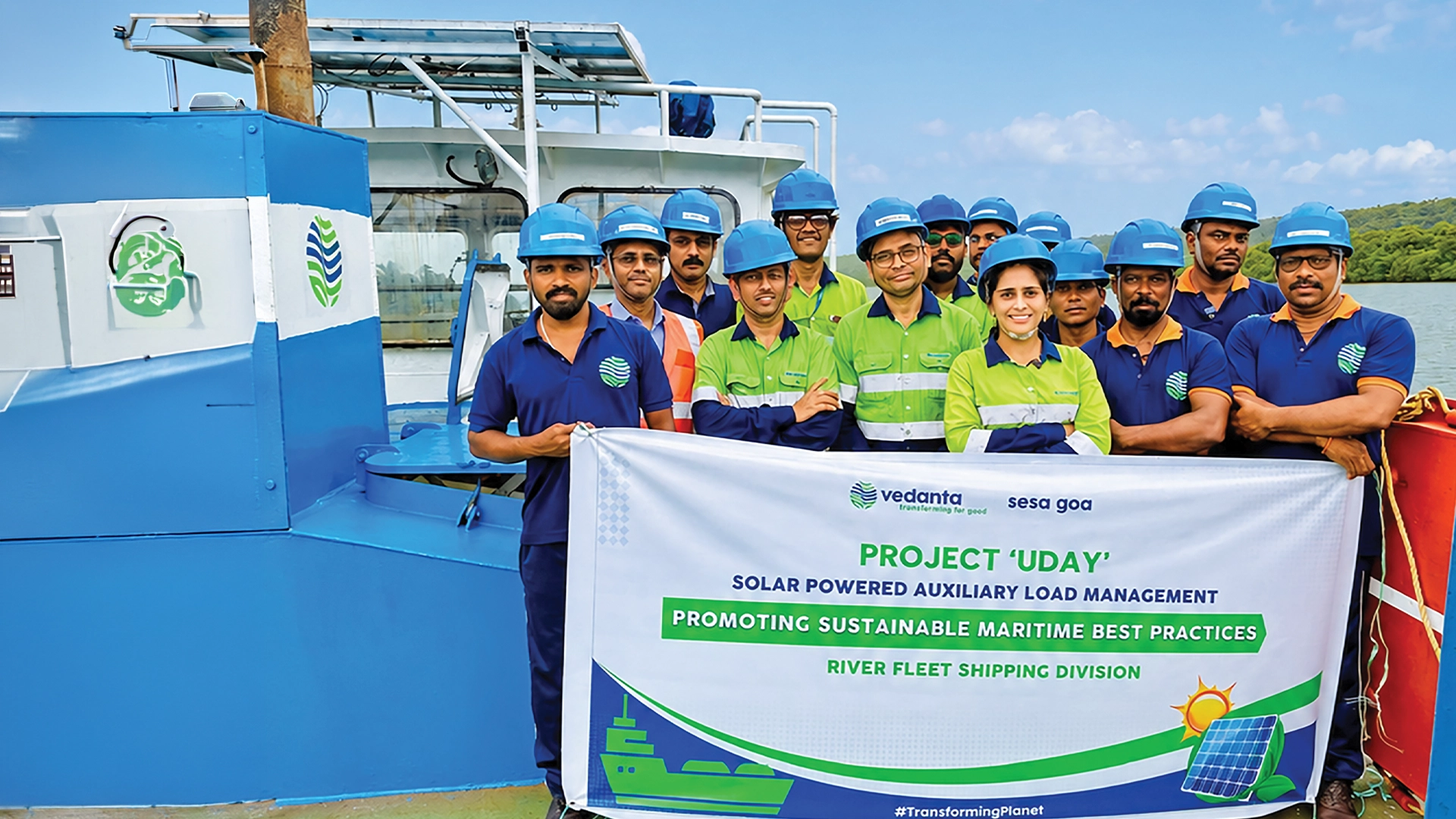
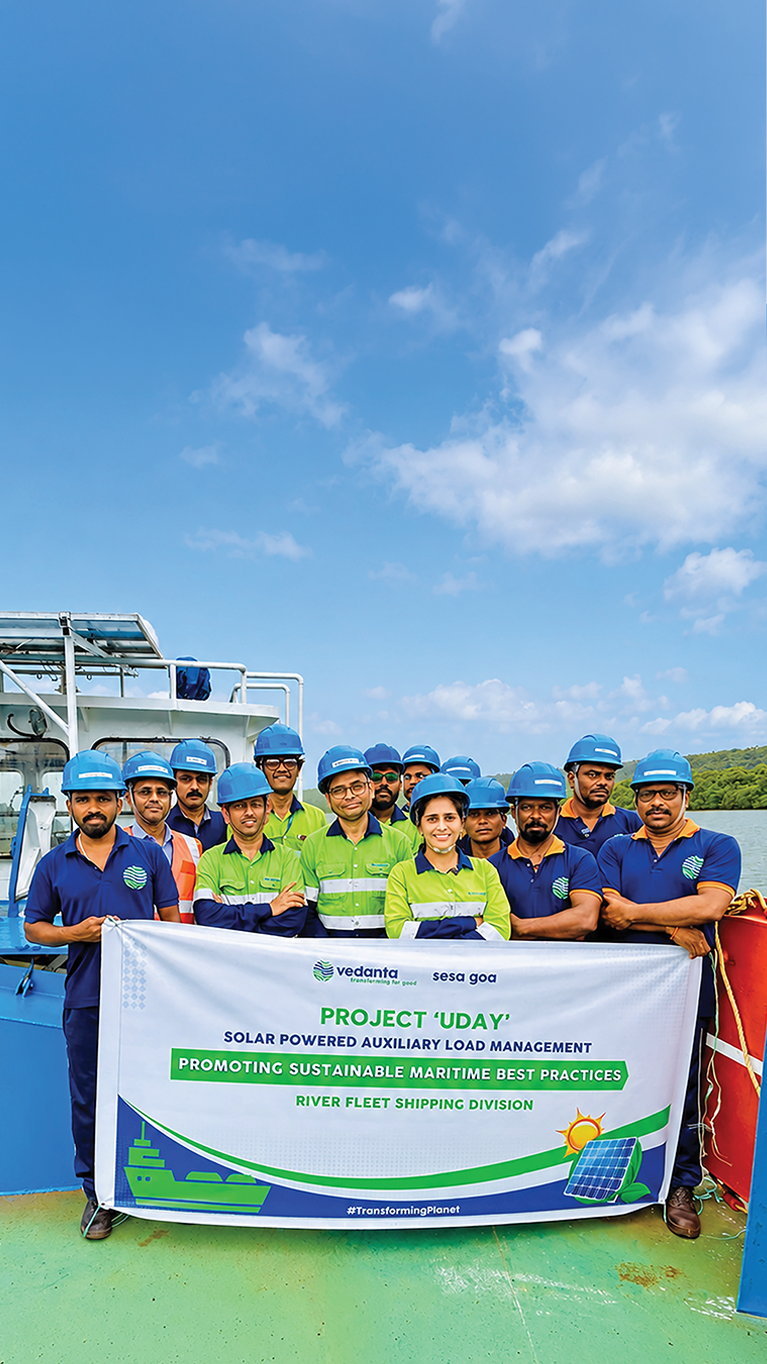
As part of our endeavour to be an ESG-forward operator in maritime logistics, we launched Project Uday at our Iron Ore operations in Goa. The project involves installing solar auxiliary power systems on barges to support cleaner onboard energy use. It reduces dependence on diesel-based generation for routine auxiliary loads, improves energy efficiency, lowers emissions and enhances the reliability of essential onboard systems.
The solar system installed on motor vessel Mogri helps reduce around 6.5 tonnes of carbon emissions every year, equivalent to nearly 297 trees planted per barge
Project Uday represents a practical step in our net zero pathway. Marine logistics continues to depend heavily on diesel, even for smaller accommodation and auxiliary loads. Shifting these requirements to renewable energy creates meaningful emission reductions and strengthens our Scope 1 decarbonisation efforts. Building on the success of the MV Mogri pilot, we aim to scale an improved and optimised solar powered system across the 21 barge RFS fleet, with extension currently progressing across 10 barges through quick installation and minimal structural modifications. At full scale, the initiative is projected to reduce nearly over 130 tonnes of CO2 equivalent emissions annually, while also improving air quality around riverine communities.


